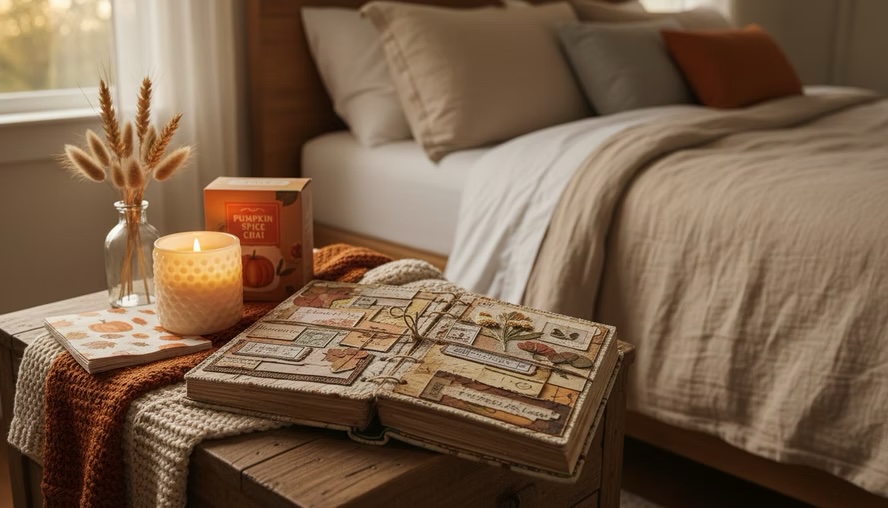
A fall junk journal can hold more than pretty paper. It can become a seasonal memory keeper, a gratitude practice, a planner, a bedroom decor piece, and a creative place to use the bits you already have at home.
That is the charm of junk journaling. The materials do not need to match perfectly. A grocery bag, a cinnamon tea wrapper, a leaf from a Saturday walk, and a torn page from an old novel can all sit together and feel intentional. Fall makes the process especially rich because the season brings texture, color, pattern, and small rituals that are easy to document.
This guide explores two different ways to build a fall junk journal. One leans into classic autumn shades like orange, red, yellow, brown, and gold. The other uses non-traditional colors and themes for a softer, moodier, or more modern take. You will also find paper ideas for signatures, fall ephemera suggestions, specific journal uses, and ways to display the finished journal as bedroom decor.
A fall junk journal starts with texture, color, and small seasonal pieces.
Start with the feeling you want the journal to have
Before choosing paper or binding, decide what kind of fall story the journal should tell. This one choice makes every later decision easier.
Some fall journals feel rustic and nostalgic. They look like apple orchards, flannel blankets, pumpkin patches, old recipe cards, and pressed leaves in library books. Others feel quiet and modern. They use dusty mauve, charcoal, muted sage, cream, copper, navy, or lavender. They might focus on rainy days, moon phases, mushrooms, late-season gardens, or cozy evenings.
Neither approach is better. They simply create different moods.
A helpful way to begin is to gather a small tray of possible materials. Pull from what you already own first.
Good starter pieces include:
- Torn book pages
- Brown paper bags
- Tea-dyed paper
- Handmade paper scraps
- Tissue paper from gifts
- Fall napkins
- Food packaging with seasonal colors
- Old envelopes
- Tags from candles, blankets, or home goods
- Pressed leaves
- Stickers, washi tape, and ribbon
Once everything sits together, the journal usually starts to reveal its direction. If the tray looks like cider, pumpkins, and golden leaves, a traditional palette may be the right fit. If it looks like mist, dark florals, mushroom brown, and cream, a non-traditional theme may feel stronger.
Build a traditional fall junk journal with warm seasonal colors
A traditional fall junk journal celebrates the colors most people connect with autumn. Think burnt orange, deep red, mustard yellow, warm brown, copper, cream, and touches of olive green.
This style works especially well if you enjoy cozy, rustic, farmhouse, cottage, woodland, or vintage-inspired projects. It also suits memory keeping because family visits, fall recipes, school events, Thanksgiving notes, pumpkin patch photos, and leaf piles all look natural in this palette.
Choose a warm color palette
Start with three to five main colors so the journal feels collected rather than chaotic. A strong traditional palette might include:
- Burnt orange
- Cranberry red
- Mustard yellow
- Kraft brown
- Warm cream
For a softer version, replace cranberry with dusty rose or rust. For a darker version, add espresso brown, forest green, or black.
Use the strongest colors on the cover, tabs, pockets, and focal pages. Let cream, brown, and aged paper act as resting space. This keeps the journal from feeling too busy.
Pick papers that feel nostalgic
Traditional fall journals look beautiful with papers that already appear weathered or handmade. Signatures, which are the folded paper sections sewn or tied into the journal, can mix several textures.
Strong paper choices include:
| Paper type | Why it works in a traditional fall journal | Best use |
| Vintage book pages | Adds age, story, and soft neutral color | Background pages, pockets, collage |
| Kraft paper | Brings in a warm brown base | Envelopes, tip-ins, journaling spots |
| Handmade paper | Adds deckled edges and natural texture | Feature pages, covers, tags |
| Tea-dyed copy paper | Looks aged without being fragile | Writing pages and folded inserts |
| Ledger paper | Adds structure and vintage detail | Lists, gratitude logs, recipe notes |
| Brown paper bags | Free, sturdy, and easy to fold | Pockets, tuck spots, covers |
Vintage book pages work best when they are not rare, valuable, or personally important. Damaged books from thrift stores, old dictionaries with missing covers, or discarded novels can provide useful pages without destroying something special.
If you want a stronger fall look, tint plain paper with tea, instant coffee, or diluted watercolor. Let paper dry fully, then iron it on low heat between scrap sheets if it curls too much.
Add classic fall ephemera
Ephemera gives a junk journal its personality. For a traditional journal, focus on items that feel gathered from the season.
Try using:
- Dried leaves
- Pressed ferns
- Acorn caps
- Small twigs
- Fall-themed stickers
- Pumpkin labels
- Apple cider packaging
- Cinnamon tea tags
- Recipe cards
- Plaid fabric scraps
- Burlap trim
- Corn husk pieces
- Seed packets
- Brown envelopes
- Postcards with warm colors
Dried leaves can be fragile, so seal them if they will be handled often. A thin coat of matte medium can help. You can also place leaves in glassine bags, vellum pockets, or clear photo sleeves. That way they stay visible without crumbling across the page.
Acorn caps add a charming woodland feel, but they are bulky. Use them on the cover, in a charm cluster, or attached to the spine with twine. For inside pages, try a stamped acorn image or a small sketch instead.
Make the cover feel like fall before it opens
A classic cover might use fabric, cardstock, a cereal box base, or the cover from an old hardcover book. Layer it with:
- A piece of plaid fabric
- A torn vintage page
- A kraft label
- A pressed leaf
- Lace or cotton trim
- A small metal brad or button
For the title, keep it simple. A handwritten label that says `Autumn Notes`, `October Days`, or `Gratitude and Gatherings` fits the mood. If you prefer no title, use a leaf cluster or fabric strip as the focal point.
Warm colors and natural pieces create a classic autumn journal style.
Create a modern fall junk journal with unexpected colors and themes
A fall journal does not have to be orange. Non-traditional fall journals can feel fresh, personal, and more suited to a bedroom or desk that uses calm colors. This approach still honors the season, but it shifts away from the expected palette.
Modern fall themes can include:
- Foggy mornings
- Dark academia
- Mushrooms and moss
- Moonlit autumn
- Neutral linen and cream
- Plum, mauve, and brown florals
- Blue and copper
- Black, white, and kraft
- Sage green and terracotta
- Lavender gray with pressed botanicals
This is a good option if bright fall colors do not match your home, wardrobe, or personal style. It also works well for a journal that stays on display.
Try a non-traditional color palette
Here are a few modern fall palettes that still feel seasonal:
| Palette | Mood | Materials to use |
| Sage, cream, mushroom brown, and gold | Soft woodland | Handmade paper, pressed ferns, gold thread |
| Dusty mauve, plum, taupe, and ivory | Romantic autumn | Floral napkins, lace, old letters |
| Navy, copper, charcoal, and cream | Moody and polished | Dark cardstock, metallic paint, vellum |
| Black, kraft, white, and rust | Graphic and simple | Paper bags, black ink, bold labels |
| Lavender gray, fog blue, and bone | Quiet rainy fall | Tracing paper, watercolor washes, pale leaves |
The key is to include at least one earthy material. Handmade paper, kraft paper, pressed leaves, or natural twine can make even unusual colors feel connected to fall.
Use themes beyond pumpkins
Pumpkins are lovely, but they are not the only fall symbol. A modern junk journal can focus on less obvious seasonal details.
Consider these themes:
Rainy windows
Use gray-blue paper, vellum, translucent pockets, umbrella sketches, tea wrappers, and soft handwriting.
Mushroom walk
Use brown, cream, sage, rust, field guide pages, tiny mushroom drawings, and pressed moss-like textures.
Night garden
Use navy, black, plum, copper, moon shapes, dried florals, and seed packets.
Cozy reading season
Use vintage book pages, library cards, tea tags, candle packaging, and notes about books read during fall.
Harvest pantry
Use food labels, recipe cards, spice packaging, grocery lists, and warm neutral papers.
These themes give the journal a clear point of view without needing every page to match.
Let modern pages breathe
Modern pages often look best with more negative space. Instead of covering every inch, leave blank areas for writing or quiet texture.
A simple modern spread might include:
- One handmade paper page in cream
- One charcoal cardstock pocket
- A small copper leaf sticker
- A torn strip of vintage text
- A vellum envelope holding a pressed leaf
- A short handwritten note in black ink
This style works because it treats each item like part of a still life. Every scrap has room to be noticed.
Choose signature papers that add texture and purpose
The signature papers form the body of the journal, so they deserve attention. A fall junk journal usually works best when the pages vary in weight, color, and feel. Too many thick pages make the spine bulky. Too many thin pages can feel flimsy. A mix gives the journal movement.
Start with three to five signatures if you want a medium journal. Each signature can hold around eight to twelve folded sheets, depending on the thickness. If you add pockets, fabric, or bulky ephemera, use fewer sheets.
Vintage book pages
Vintage book pages bring instant character. They work well as full pages, half pages, foldouts, pockets, and collage pieces.
Use them for:
- Background texture
- Hidden journaling spots
- Page tabs
- Collage clusters
- Envelopes
- Poetry or quote pages
If the pages are brittle, reinforce the fold with washi tape, masking tape, or a strip of thin fabric. You can also sew or glue vintage text onto stronger paper instead of using it as a full signature page.
Kraft paper
Kraft paper is one of the most useful fall journal materials. It looks warm, takes ink well, and pairs with both traditional and modern palettes.
Use it for:
- Pocket pages
- Flip-outs
- Tags
- Writing panels
- Mini folders
- Belly bands
- Reinforced spines
Brown paper lunch bags are especially useful. Fold the bottom flap into a pocket, trim the top to size, and bind the bag directly into a signature. The bag opening becomes a hidden place for photos, notes, receipts, or extra tags.
Handmade paper
Handmade paper adds softness and texture. It often has deckled edges, visible fibers, and small color variations. It can make a journal look thoughtful even when the layout is simple.
Use handmade paper for:
- First pages in each signature
- Quote pages
- Gratitude entries
- Decorative dividers
- Covers for mini booklets
- Photo mats
Some handmade paper does not like heavy glue or wet media. Test a scrap first. A glue stick, narrow double-sided tape, or small stitched attachment often works better than liquid glue.
Other signature papers to try
A fall journal gets more interesting when the papers come from different places. Try mixing in:
- Old calendar pages
- Sheet music
- Tracing paper
- Vellum
- Watercolor paper
- Scrapbook paper
- Grid paper
- Children’s handwriting paper
- Seed catalog pages
- Grocery bags
- Wrapping paper
- Fall napkins backed with plain paper
- Packaging from candles, tea, soap, or baked goods
Napkins need support because they are thin. Separate the printed top layer, then glue or decoupage it onto book paper, cardstock, or kraft paper. Once dry, it can become a page, pocket, tag, or cover panel.
Mixed signatures give the journal a useful balance of writing space and texture.
Fill the journal with fall ephemera that feels collected
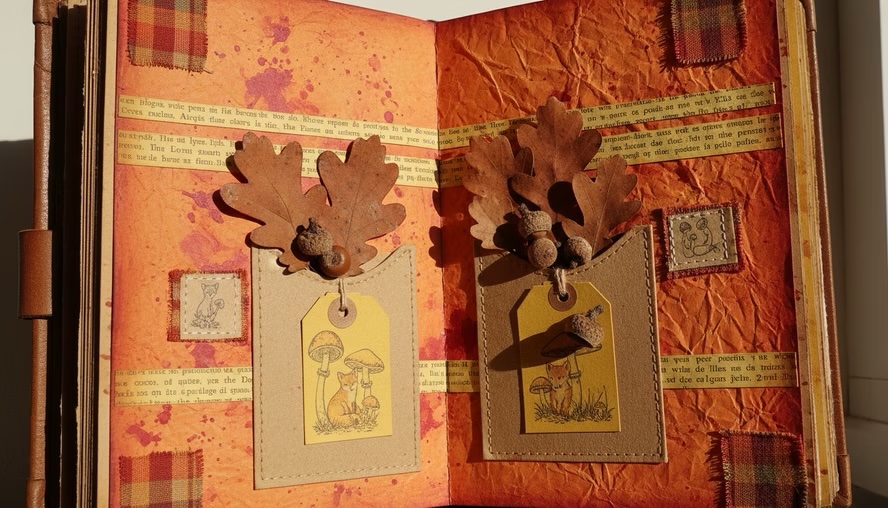
The best fall ephemera often comes from everyday life. Before buying supplies, check the kitchen, entryway, recycling bin, and seasonal storage.
Fall ephemera can be flat, textured, written, printed, or natural. The mix matters more than the source.
Natural ephemera
Natural pieces bring the season directly onto the page.
Use:
- Dried leaves
- Pressed flowers
- Acorn caps
- Pine needles
- Small feathers found outdoors
- Thin bark pieces
- Seed pods
- Dried herbs
- Pressed grasses
Avoid adding anything damp, dirty, or likely to attract pests. Dry natural pieces fully before using them. If you collect outdoors, follow local rules and avoid taking from protected areas.
For bulky natural pieces, attach them to the cover or spine rather than inside the signatures. You can tie an acorn cap to the spine with waxed thread, glue a tiny pine cone to a ribbon bookmark, or add dried herbs to a small envelope.
Paper ephemera
Paper ephemera is easier to use inside the journal because it lies flat.
Good fall options include:
- Fall-themed stickers
- Pumpkin and apple stickers
- Grocery receipts from seasonal baking
- Tea wrappers
- Candle labels
- Pie box labels
- Coffee sleeves
- Recipe cards
- Farmers market tags
- Old library cards
- Bookmarks
- Tickets from fall events
- Place cards from Thanksgiving
- Church supper flyers
- School event notes
- Wrapping paper scraps
Packaging from home items can be surprisingly beautiful. A soap box with copper lettering, a candle label with a botanical design, or a tea carton with warm colors can become a pocket, tab, or cover accent.
Fabric and trim
Fabric adds softness and makes the journal feel cozy.
Try:
- Flannel scraps
- Linen pieces
- Lace trim
- Cotton ribbon
- Burlap
- Old sweater cuffs
- Embroidery floss
- Twill tape
- Torn muslin strips
Use fabric sparingly inside the journal if you want it to close well. A fabric tab on every few pages adds texture without too much bulk.
Use a fall junk journal in practical and personal ways
A finished journal can be more than a craft project. It can support seasonal routines, hold memories, and keep plans in one place. The best use depends on what you want to remember or practice during fall.
Use it as a gratitude journal
Fall naturally invites reflection. A gratitude journal gives you a place to notice small comforts, kind moments, good meals, and ordinary beauty.
You can set up pages with short daily entries or occasional lists. Try prompts such as:
- Something that made the house feel cozy
- A meal worth remembering
- A person who helped this week
- A color noticed outdoors
- A small thing that felt like enough
Unique paper ideas for this use:
| Paper idea | How to use it |
| Tea-dyed lined paper | Daily gratitude entries |
| Handmade cream paper | Weekly reflection pages |
| Vintage poetry pages | Backgrounds for short written notes |
| Kraft tags | One gratitude note per tag |
| Vellum pockets | Hold private gratitude slips |
For a traditional version, use warm oranges and browns with pressed leaves. For a modern version, use cream, sage, taupe, and small gold details.
Use it as a scrapbook for fall memories
A fall scrapbook can hold photos, receipts, tickets, notes, and pieces from seasonal outings. It does not need polished layouts. Junk journal scrapbooking works best when it feels layered and lived in.
Use it for memories such as:
- Pumpkin patch visits
- Apple picking
- Fall hikes
- Football games
- Bonfires
- Halloween costumes
- Thanksgiving gatherings
- Baking days
- Craft nights
- Weekend road trips
Unique paper ideas for this use:
| Paper idea | How to use it |
| Heavy cardstock | Photo mats and sturdy pages |
| Brown paper bags | Pockets for tickets and receipts |
| Map pages | Backgrounds for fall drives or hikes |
| Calendar pages | Date-based memory spreads |
| Packaging from seasonal foods | Collage material tied to specific memories |
Leave room for captions. A photo becomes more meaningful when paired with a sentence about the weather, the people, the smell of the kitchen, or the reason the day mattered.
Use it as a planner for seasonal activities
A fall planner can help keep the season from disappearing too quickly. Instead of a plain to-do list, the junk journal format makes planning feel creative.
Include pages for:
- Fall bucket lists
- Farmers market dates
- Meal planning
- Baking plans
- Home projects
- Garden cleanup
- Halloween prep
- Thanksgiving menus
- Gift ideas
- Reading lists
- Movie nights
- Craft projects
Unique paper ideas for this use:
| Paper idea | How to use it |
| Grid paper | Monthly plans and checklists |
| Ledger paper | Meal plans or project lists |
| Kraft folders | Store coupons, recipes, or tickets |
| Index cards | Movable task lists |
| Old envelopes | Hold receipts, small notes, or reservation details |
For tabs, use labels like `October`, `Meals`, `Outings`, `Home`, and `Thankful`. A planner journal can still look artistic, but its pages should be easy to write on. Keep some spreads simple.
Use it as a recipe and kitchen memory journal
Fall cooking has its own paper trail. Recipe cards, spice labels, grocery lists, and notes about family dishes all fit beautifully in a junk journal.
Add pages for:
- Soup recipes
- Pie notes
- Apple desserts
- Favorite teas
- Thanksgiving dishes
- Preserves or jams
- Notes from shared meals
- Changes made to recipes
Unique paper ideas for this use:
| Paper idea | How to use it |
| Recipe cards | Main writing space |
| Parchment-style paper | Baking notes |
| Spice packaging | Collage and tabs |
| Grocery bags | Pockets for lists |
| Napkin-backed cardstock | Decorative dividers between recipe sections |
A stained or handwritten recipe card can become the heart of the journal. If the original is precious, scan or photocopy it and use the copy in the journal.
Use it as a nature journal
Fall changes quickly. A nature-focused junk journal can track leaves, weather, birds, garden changes, and neighborhood walks.
Include:
- Leaf rubbings
- Pressed leaves
- Weather notes
- Sketches
- Color swatches
- Plant names
- Moon observations
- Trail notes
- Garden cleanup records
Unique paper ideas for this use:
| Paper idea | How to use it |
| Watercolor paper | Leaf studies and color swatches |
| Field guide pages | Collage and reference backgrounds |
| Handmade paper | Pressed botanical displays |
| Tracing paper | Overlays for sketches |
| Seed packets | Pockets and themed inserts |
This use works beautifully with both traditional and modern styles. A traditional nature journal might focus on red maple leaves and golden fields. A modern one might use mushrooms, moss, fog, and charcoal ink.
Turn the journal into bedroom decor
A fall junk journal can be a decor piece even when it is closed. Because it is handmade, it adds texture and warmth to a bedroom in a way mass-produced decor often cannot.
Place it on a nightstand, dresser, bookshelf, tray, or reading chair. Let it sit with a candle, a small vase, a ceramic dish, or a stack of seasonal books. The journal becomes part of the room’s fall mood.
Match the color scheme to the room
If the bedroom already uses warm neutrals, a traditional palette will likely fit well. Burnt orange, rust, cream, and brown look natural with wood furniture, rattan baskets, tan bedding, brass lamps, and woven blankets.
If the room is cooler or more minimal, use a non-traditional palette. Sage, mushroom brown, ivory, charcoal, navy, mauve, or copper can suggest fall without clashing with the space.
Try these pairings:
| Bedroom style | Journal palette | Decor details |
| Farmhouse | Cream, kraft, rust, black | Plaid fabric, recipe cards, brown twine |
| Cottage | Mustard, rose, olive, cream | Florals, lace, vintage book pages |
| Minimal | Ivory, taupe, charcoal | Plain kraft pockets, black ink, linen tabs |
| Moody | Navy, plum, copper, brown | Dark florals, vellum, metallic accents |
| Woodland | Sage, bark brown, moss, cream | Leaves, mushrooms, handmade paper |
A journal displayed in the bedroom should look good from the outside. Spend extra care on the spine, cover, and closure. A ribbon wrap, fabric tie, button closure, or waxed cord can make it feel finished.
Use fall napkins as decorative material
Fall napkins are one of the easiest home items to turn into journal decor. They often have seasonal patterns, such as leaves, pumpkins, florals, mushrooms, plaid, or metallic prints.
Ways to use napkins include:
- Cover panels
- Page backgrounds
- Tags
- Pockets
- Spine fabric substitutes
- Collage pieces
- Bookmark strips
- Drawer-style labels
To make napkins stronger, peel away the plain backing layers and keep only the printed top layer. Glue it to cardstock, book paper, or kraft paper. Smooth it gently from the center outward. Once dry, trim the piece and use it like patterned paper.
A napkin-covered cover can match the bedroom’s seasonal bedding or throw pillows. If the room uses soft colors, choose napkins with muted leaves or faded florals. If the room uses bold autumn decor, choose pumpkins, plaid, or deep red botanicals.
Save packaging from home items
Seasonal packaging can become some of the most personal material in the journal. Look for packaging from items you already use in the bedroom and around the home.
Good examples include:
- Candle boxes
- Tea cartons
- Soap wrappers
- Lotion boxes
- Wax melt labels
- Blanket tags
- Pillow packaging
- Ribbon from gifts
- Tissue paper from home goods
- Coffee sleeves
- Chocolate wrappers
Packaging works well because it often reflects the colors and scents of the season. A candle box that says vanilla, cedar, apple, clove, or amber can become part of the journal’s story without needing much extra decoration.
Use sturdy packaging for structural pieces. A candle box panel can become a tuck spot. A soap wrapper can become a belly band. A tea carton can become a mini folder. Thin packaging can be torn and layered into collage clusters.
A finished journal can act as seasonal decor when its colors match the room.
Add finishing details that make the journal feel complete
Finishing details help a fall junk journal feel useful and beautiful rather than unfinished. These small choices also make the journal easier to handle.
Add pockets and tuck spots
Pockets create places for loose pieces. They are especially useful for photos, receipts, gratitude slips, recipes, and seasonal lists.
Easy pocket materials include:
- Book pages
- Kraft paper
- Envelopes
- Paper bags
- Packaging
- Folded scrapbook paper
- Napkin-backed cardstock
Use glue only along the edges that need to hold. Leave the top or side open. Test the pocket with a tag before the glue dries so you know it has enough room.
Create tabs for quick access
Tabs make the journal easier to use. They also add shape to the journal’s edge.
Good tab materials include:
- Fabric scraps
- Folded book page circles
- Punched cardstock
- Packaging strips
- Leather scraps
- Ribbon
- Washi tape folded over the page edge
For a gratitude journal, tabs might divide weeks. For a planner, tabs can mark months or categories. For a scrapbook, they might mark events.
Balance bulk before binding
Fall materials can get thick fast. Acorn caps, layered fabric, tags, pockets, and folded inserts all add bulk. Before binding, stack the signatures and press them gently together. If the spine already looks strained, remove a few pages or move bulky items to the cover.
A journal that opens well will get used more often. Beauty matters, but function matters too.
Keep a small add-in kit nearby
A junk journal grows over time. Keep a small envelope or box with matching supplies so adding to it feels easy.
Include:
- A glue stick
- A black pen
- Extra tags
- Small stickers
- A few paper clips
- Pressed leaves
- Scrap paper
- Date stamp or number stickers
- Washi tape
Store the kit with the journal on a shelf or in a nightstand drawer. When a memory, receipt, or thought appears, you can add it without searching for supplies.
A fall junk journal can be as useful as it is beautiful
The best fall junk journal is not defined by perfect pages. It is defined by use, texture, and personal meaning. A traditional version can glow with orange, red, yellow, kraft brown, and pressed leaves. A modern version can feel quiet and fresh with sage, mauve, navy, charcoal, cream, or copper.
The same journal can hold gratitude lists, seasonal plans, recipes, nature notes, and photos from fall days. It can also sit on a bedroom nightstand as part of the room’s decor, especially when the cover uses colors, napkins, fabric, and packaging that connect to the space.
Start with a few folded papers, add what the season gives you, and let the journal become a place for both making and remembering. That is what makes it versatile. It is part notebook, part scrapbook, part planner, part art object, and part time capsule for one of the most textured seasons of the year.


Leave a Reply