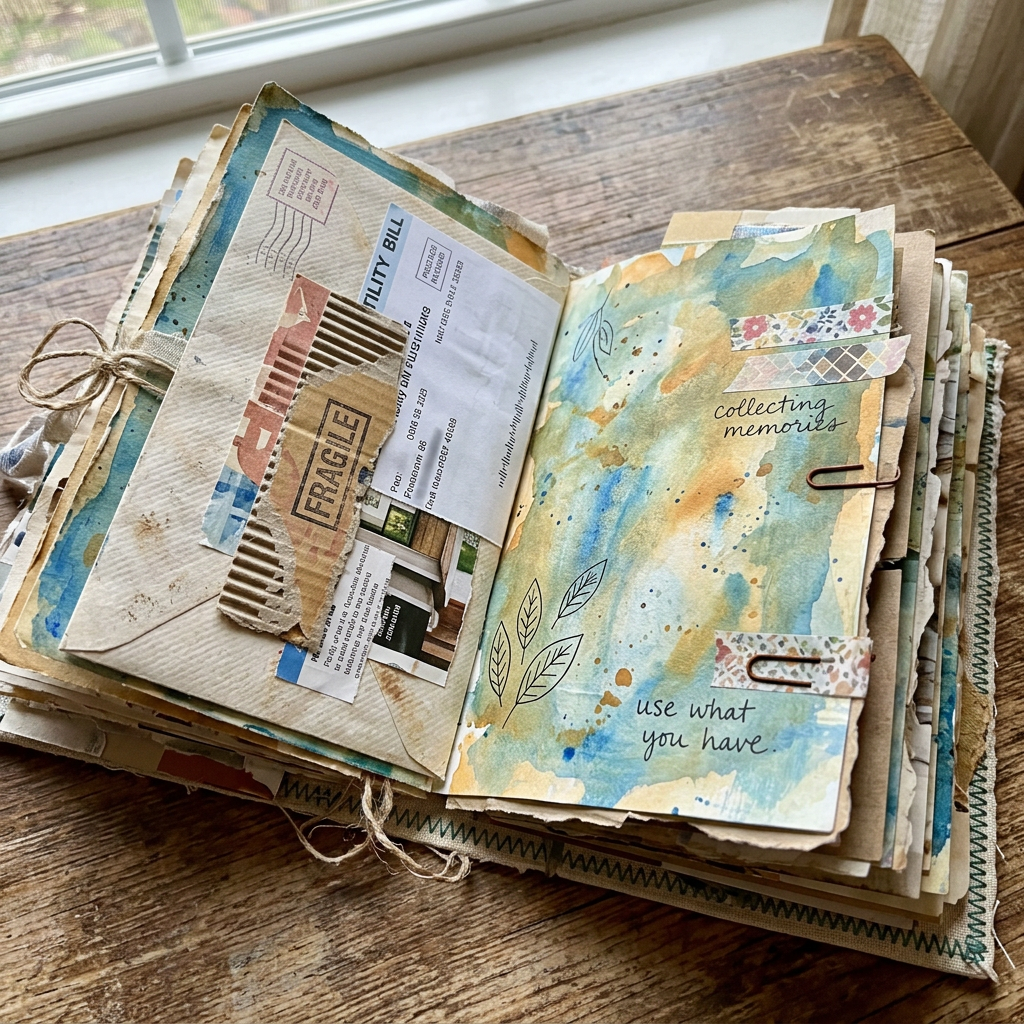
Creating a junk journal using true junk is a rewarding way to recycle, reuse, and repurpose materials that would otherwise be thrown away. Whether you are on a tight budget or simply love the idea of turning trash into art, junk journals offer endless possibilities. This post explores practical ideas and techniques to help you build a unique journal entirely from items you already have at home or that are destined for the trash bin.
Using Junk Mail to Add Color and Function
Junk mail often feels like clutter, but it can become a valuable resource for your journal. Envelopes, flyers, and advertisements come in various colors and patterns that add visual interest.
- Backgrounds: Flatten envelopes and flyers to create vibrant backgrounds for your pages. Use glue or double-sided tape to attach them.
- Pockets and Envelopes: Cut and fold junk mail into pockets to hold notes, tags, or small keepsakes. You can sew or glue these pockets onto pages.
- Decorative Elements: Cut out interesting shapes, logos, or text from flyers to use as embellishments.
Try layering different pieces of junk mail for a collage effect. This adds depth and texture to your journal pages.
Repurposing Old Papers for Layers and Writing Surfaces
Old papers, such as personal records (make sure to remove any sensitive information), school worksheets, or scrap paper, can serve multiple purposes.
- Layering: Use torn or cut pieces to build layers on your pages. This creates a tactile experience and visual complexity.
- Writing Surfaces: Paint over old papers with gesso or white paint to create fresh surfaces for journaling or drawing.
- Texture: Crumple or fold papers before gluing them down to add texture.
Using old papers reduces waste and gives your journal a personal touch, especially if the papers have sentimental value.
Incorporating Food Packaging for Unique Textures
Food packaging like cereal boxes, snack wrappers, and frozen food bags offer sturdy materials and interesting textures.
- Cereal Boxes: Cut into shapes or strips to create durable page reinforcements or covers.
- Snack Wrappers: Their shiny or matte finishes add contrast. Flatten and glue them onto pages for a pop of color.
- Labels: Use labels from jars or boxes as decorative stickers or tags.
Make sure to clean any food residue before using packaging materials. Combining these with papers and junk mail creates a mixed-media effect.
Using Self-Care Packaging for Embellishments
Empty skincare product boxes, labels, and packaging can add a touch of elegance or whimsy.
- Boxes: Flatten and cut into shapes or frames.
- Labels: Use as stickers or cut into strips for borders.
- Texture: Some packaging has embossed or textured surfaces that add interest.
These materials often have high-quality printing and finishes, which can elevate the look of your journal pages.
Creating Painted Papers with Marks and Paint
Transform plain used papers into artful backgrounds by painting or marking them.
- Gesso Base: Apply a thin layer of gesso to prime papers. This seals the surface and allows paint to adhere better.
- Paint Layers: Use acrylic paints, watercolors, or even old makeup powders to add color.
- Marks and Stamps: Use household items like bottle caps, sponges, or combs to create patterns.
- Natural Dyes: Extract colors from old vegetables like onion skins, beetroot, or spinach to dye papers naturally.
Experiment with layering paint and marks to build rich, textured pages that invite touch and exploration.
Adding Texture and Color with Other Materials
Beyond paint, you can use various materials to change the feel and look of your pages.
- Gessos: Different types of gesso can add texture or smoothness.
- Old Makeup: Eyeshadows and blushes can be repurposed as pigments.
- Natural Dyes: Soak papers in tea, coffee, or vegetable dyes for subtle color shifts.
- Fabric Scraps: Add bits of fabric or lace for softness and dimension.
These materials help you customize your journal and make each page unique.
Crafting a Complete Journal from What You Have
Challenge yourself to create an entire junk journal using only materials you already own or that would be discarded.
- Gather Materials: Collect junk mail, old papers, packaging, and scraps.
- Plan Your Journal: Decide on size, binding method (staples, stitching, or glue), and page order.
- Assemble Pages: Layer and decorate each page using the techniques above.
- Bind Your Journal: Use simple binding methods like pamphlet stitch, ring binders, or ribbon ties.
This approach not only saves money but also reduces waste and sparks creativity.
Creating junk journals from true junk is a practical and artistic way to recycle. By using everyday discarded items, you can build a journal full of texture, color, and personal meaning. Start collecting your materials today and see how trash can become a treasure in your hands.
 Creativity and Inspiration
Leave a comment