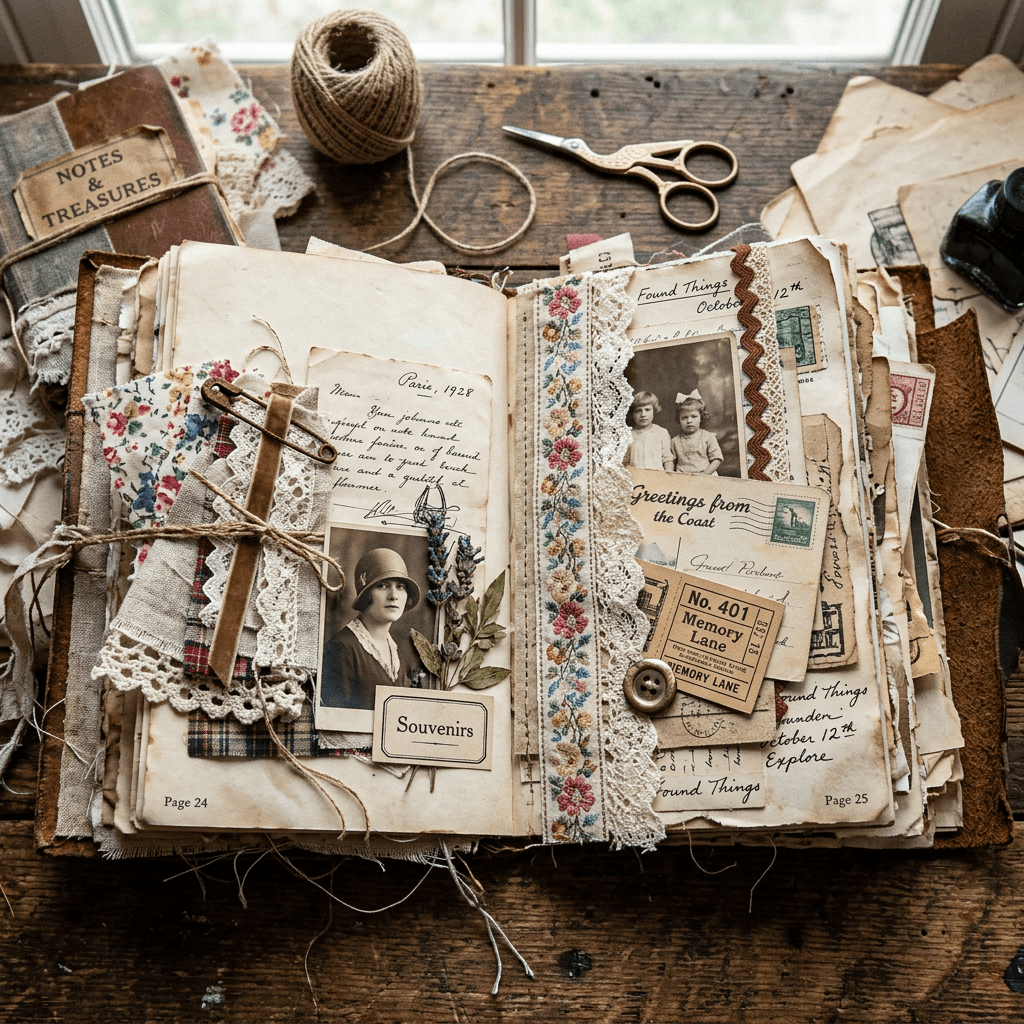
Vintage junk journals offer a unique way to preserve memories, express creativity, and enjoy the charm of the past. These handmade books combine old papers, fabrics, and embellishments to create a tactile experience that feels both personal and timeless. If you want to build a vintage-themed junk journal that stands out, understanding the right colors, materials, and techniques is essential. This guide explores how to bring a vintage aesthetic to life in your journal, helping you craft a piece that appeals to a wide audience.
Choosing Color Palettes That Evoke Vintage Charm
The color palette sets the tone for your vintage junk journal. To capture that nostalgic feel, focus on muted tones and pastels rather than bright or modern colors. Here are some palettes that work well:
- Soft sepia and beige: These warm neutrals mimic aged paper and old photographs.
- Dusty rose and faded mauve: Gentle pinks with a hint of gray add a romantic, antique vibe.
- Sage green and olive: Earthy greens bring a natural, vintage botanical feel.
- Pale blues and faded turquoise: These colors recall vintage china and old postcards.
- Cream and ivory: Off-white shades soften the overall look and add warmth.
Using these colors consistently across your papers, fabrics, and embellishments helps create a cohesive vintage feel. Avoid overly saturated or neon colors, which clash with the aged aesthetic.
Selecting Papers, Magazines, and Images to Enhance Vintage Style
The heart of any junk journal lies in its papers and images. For a vintage theme, look for materials that show signs of age or have classic designs:
- Aged book pages and sheet music: These add texture and history. Look for yellowed or browned pages.
- Old postcards and letters: Scanned or original ephemera with handwritten notes or stamps bring authenticity.
- Vintage magazine clippings: Ads, fashion spreads, and illustrations from the 1920s to 1950s work well.
- Botanical prints and antique maps: These images add interest and fit many vintage themes.
- Black and white or sepia photographs: Use copies of old family photos or vintage portraits.
You can source these from thrift stores, flea markets, or online archives. To enhance the vintage look, gently distress papers by tea-staining, crumpling, or sanding edges.
Recommended Fabrics and Trims That Complement Vintage Themes
Fabric and trims add softness and dimension to your junk journal. Choose materials that feel old-fashioned and tactile:
- Lace and crochet trims: Delicate lace borders or doilies evoke Victorian and Edwardian styles.
- Burlap and linen: Natural fibers with a rough texture add rustic charm.
- Velvet ribbons: Soft velvet in muted colors adds a touch of luxury.
- Cotton calico or floral prints: Small-scale floral fabrics recall vintage textiles.
- Buttons and metal charms: Antique brass or pearl buttons and charms shaped like keys or clocks enhance the theme.
Attach trims along page edges, use fabric as pockets or tags, or create fabric clusters for visual interest.
Vintage junk journal page with lace trims and aged papers
Ideas for a Cohesive Vintage Theme with Specific Motifs and Eras
A strong theme helps your junk journal feel unified and intentional. Consider focusing on one of these vintage eras or motifs:
- Victorian Era (1837–1901): Think lace, floral patterns, sepia tones, and romantic imagery like roses and old letters.
- 1920s Art Deco: Use geometric patterns, gold accents, and black-and-white photos for a glamorous feel.
- 1940s Wartime: Incorporate ration cards, vintage stamps, and patriotic colors with muted reds and blues.
- Botanical Vintage: Focus on pressed flowers, botanical prints, and natural textures.
- Travel and Exploration: Use old maps, postcards, and travel ephemera from the early 20th century.
Choose motifs like clocks, keys, butterflies, or handwritten script to repeat throughout your journal. This repetition ties pages together and reinforces the vintage mood.
Techniques to Convey Vintage Style Using Ephemera and Embellishments
The way you arrange and alter your materials can deepen the vintage feel. Try these techniques:
- Ephemera layering: Overlap postcards, tickets, and scraps of paper to create textured clusters.
- Altered paper clips: Wrap paper clips with lace, ribbon, or tiny charms to add vintage flair.
- Paper clusters: Group small pieces like tags, buttons, and scraps on a page corner for a curated look.
- Tags and journal cards: Use tea-stained or inked edges on tags and cards, then add handwritten notes or vintage stamps.
- Distressing edges: Sand, tear, or ink edges of papers to mimic wear and age.
- Handwriting and calligraphy: Add personal notes or quotes in cursive or old-fashioned script fonts.
These details invite the viewer to explore the journal closely and appreciate the craftsmanship.
Key Features That Make a Vintage Junk Journal Appealing
A vintage junk journal attracts many because it offers more than just a book. Here are features that make it special:
- Tactile experience: The mix of textures from lace, paper, and fabric invites touch and interaction.
- Storytelling: Each page tells a story through images, handwriting, and ephemera, sparking imagination.
- Personalization: Handmade elements and space for journaling make it a personal keepsake.
- Nostalgia: The vintage style connects people to the past and evokes warm memories.
- Versatility: It can serve as a diary, scrapbook, art journal, or gift.
By combining these features with a clear vintage theme, your junk journal becomes a timeless treasure that resonates with many.
 Creativity and Inspiration
Leave a comment